Plumbing guidance for Albany homes
Old-house know-how. Clear plumbing next steps.
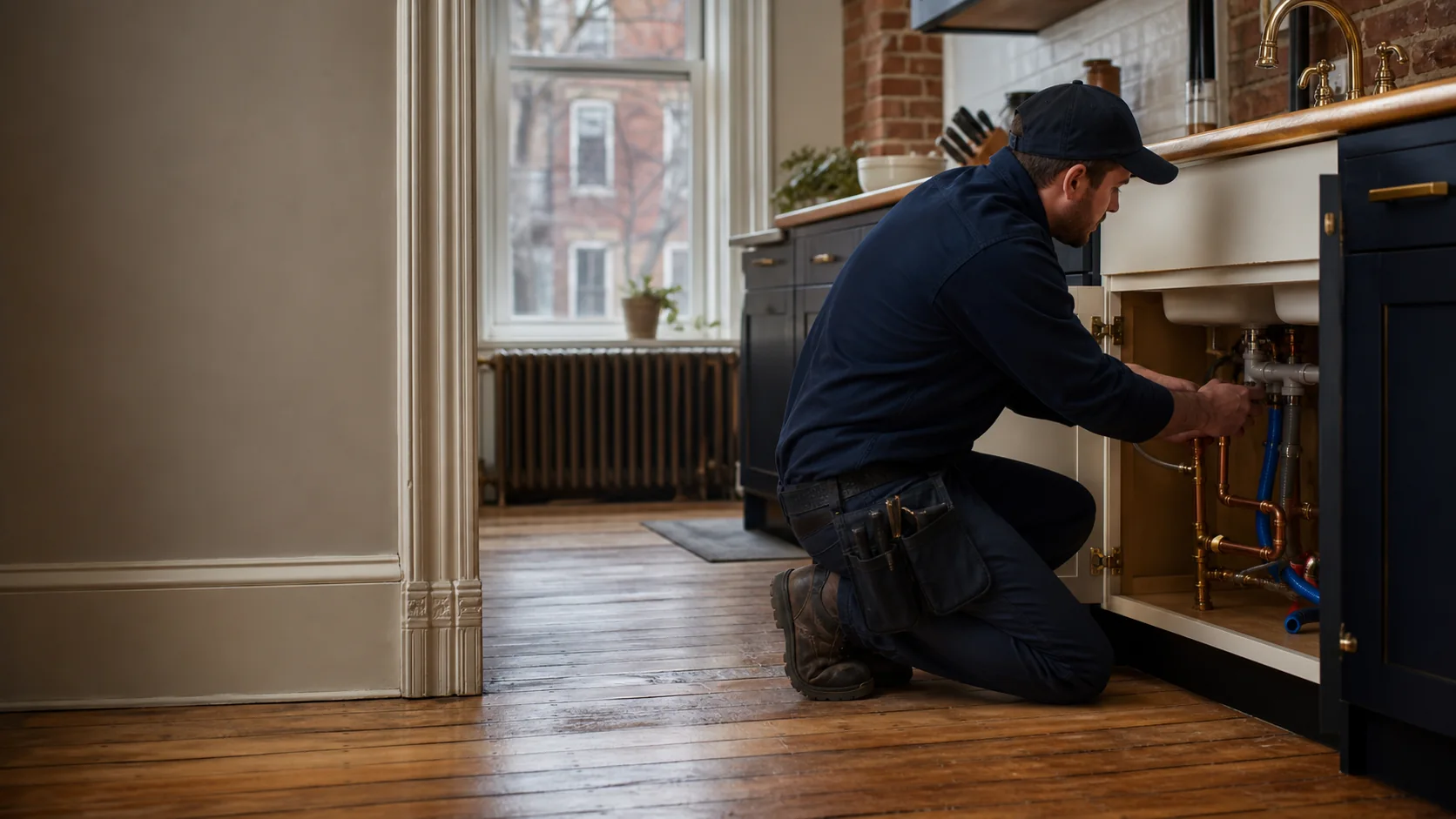
Albany homes span compact 19th-century rowhouses, early streetcar neighborhoods, and postwar streets. Plumbing plans work better when they account for stacked fixtures, masonry walls, older service lines, and a real Capital Region freeze cycle.
Independent matching resource · No-pressure request
Why the house matters
Plumbing lives inside local building history.
From Center Square brownstones and Arbor Hill rowhouses to bungalows around Pine Hills and newer homes west of downtown, Albany plumbing is rarely one-size-fits-all.
Read the planning guide →Start with the system
Residential plumbing help, organized by the problem.
Plumbing Repairs
A dripping faucet or a toilet that won’t stop running rarely announces its real cause up front, so diagnosis has to come before any repair estimate.
Explore service →02Drain & Sewer
When the same drain backs up more than once, the pattern usually points past the fixture toward the branch line, the vent, or the sewer connection itself.
Explore service →03Water Heaters
Choosing between a tank and a tankless unit comes down to how much hot water the household actually uses, what fuel and venting are already in place, and what the electrical panel can support.
Explore service →04Fixture Installation
Swapping in a new faucet, sink, or toilet only goes smoothly when the new piece is matched to the pressure, valves, and waste lines already hiding behind the wall.
Explore service →05Pipe Replacement
Old galvanized supply lines rarely fail all at once; they narrow, rust, and drop pressure gradually until repiping becomes the more sensible fix than another patch.
Explore service →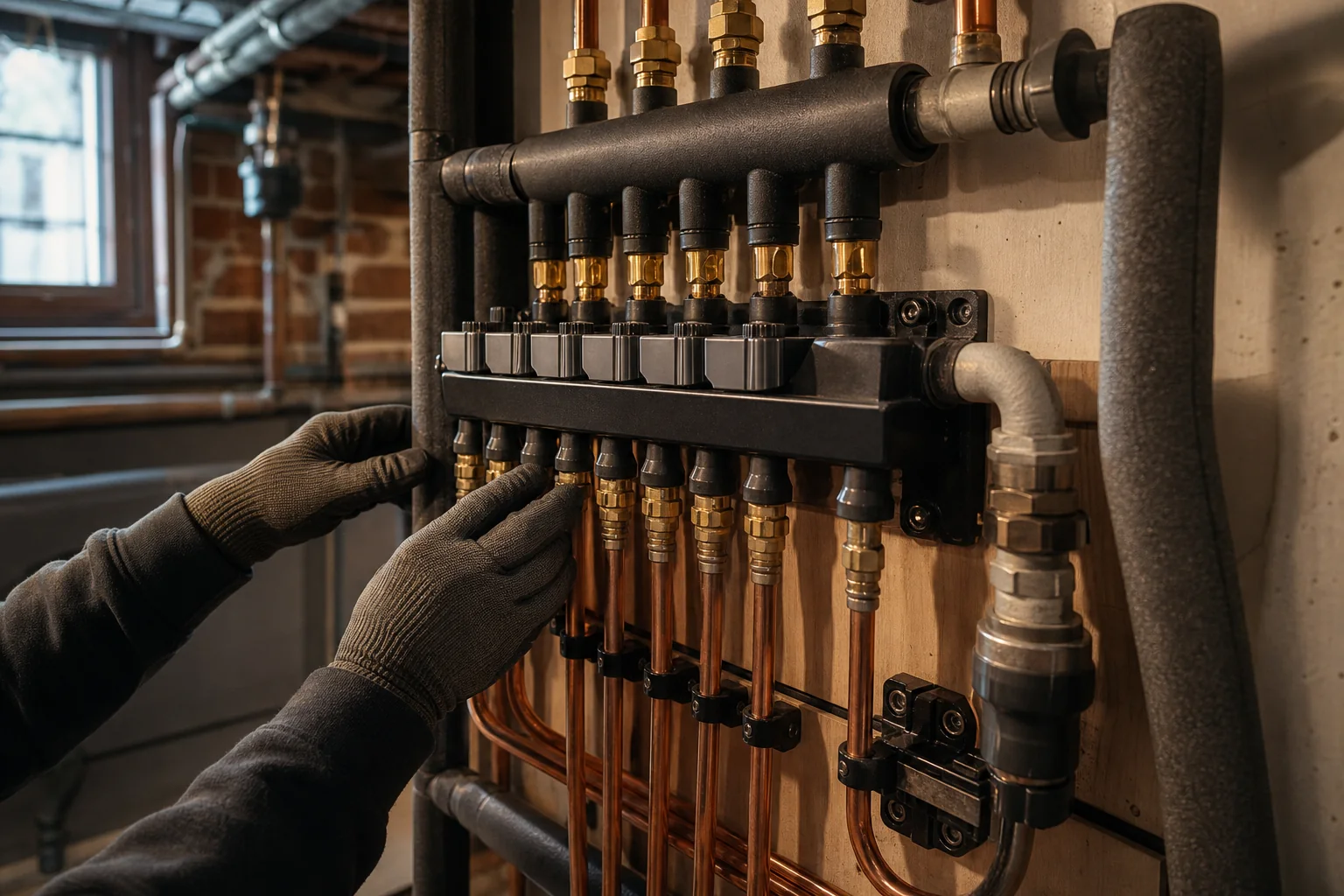
The invisible work
Access, support, valves, and testing matter after the wall closes.
A faucet is the only part anyone sees. Everything that keeps it working — the shutoff behind it, the vent that lets it drain quietly, the joints holding pressure inside the wall — gets judged later, when something goes wrong instead of right.
See a sensible processBuilt in layers
“From Center Square brownstones and Arbor Hill rowhouses to bungalows around Pine Hills and newer homes west of downtown, Albany plumbing is rarely one-size-fits-all.”
Planning-level context
Price follows access and diagnosis.
Swapping a visible fixture is one kind of job. Cutting into plaster, brick, or a finished Pine Hills basement to reach the pipe behind it is another, and the difference shows up in both time and the bill.
Open the cost guide →A calm first step
Describe the issue. Get connected for a local conversation.
Tell us what the fixture, drain, or wall is doing, roughly when it started, and whether the water is already shut off. If it’s actively flooding, close the valve first and call an emergency provider before filling out anything.
Common questions
Useful answers before you call.
Is this the plumbing company itself?
No — this is an independent matching site. What you submit may go to a local provider who can speak to their own availability and qualifications.
Will a photo get me a real number?
It’s a starting point, not a quote. Confirming what’s actually behind an Albany wall usually takes an in-person look.
Water’s actively coming in — what now?
Get to the nearest valve or the main, shut it if you safely can, protect what’s nearby, and call an emergency plumber before anything else.
Before you pick up the phone